Most HR teams come to nicotine testing through the benefits budget — a tobacco surcharge on the group health plan, a wellness incentive that needs verification, or an insurer asking for documented status. Those are defensible uses. Hiring is a different story, and it is where programs get into trouble. This 2026 guide covers seven screening options HR should understand, from lab-grade blood assays to sub-dollar rapid strips, plus the compliance question that decides whether any of them belongs in your process.
Start Here: Can You Legally Act on the Result?
Roughly 28 to 29 states plus the District of Columbia — about half the country, with sources disagreeing on the exact tally — have smoker protection statutes or broader lawful-off-duty-conduct laws. These generally prohibit refusing to hire or firing someone for using tobacco during non-working hours, away from company premises. Several states, including California, Colorado, New York and North Carolina, reach the same outcome through general lawful-activity statutes that never mention tobacco.
The consequence is blunt: in a protected state, a positive cotinine result is not something you can act on in hiring or discipline, so testing applicants delivers little. Insurance underwriting is governed separately — carriers verify tobacco status because it sets premium class, and employment statutes do not reach that. Wellness incentives, pre-surgical clearance and cessation monitoring also sit on firmer ground. Confirm your state’s position with employment counsel before buying anything.
Why Every Test Targets Cotinine
Nicotine’s half-life is about one to two hours, so it is effectively gone by collection time. Cotinine, its primary metabolite, has a half-life of roughly 16 to 24 hours and remains detectable for two to four days after occasional use, up to about ten days in regular users. No cotinine test distinguishes the source — cigarettes, vapes, pouches, smokeless tobacco, patches and gum all register, so an employee using nicotine replacement therapy to quit will screen positive.
1. Quest Diagnostics Tobacco Cessation (Cotinine) Blood Test
For HR teams running biometric screening events, this is the most defensible option available. Quest measures cotinine in blood by specific immunoassay with a positive cutoff of 16 ng/mL — an order of magnitude more sensitive than any rapid strip. Quest positions it for employer population-health and wellness use, so incentive dollars go to the right people instead of relying on self-report, and recommends employers build a formal appeal path such as a retest or physician affidavit — a recommendation worth copying into your policy. Drawback: no published employer pricing, a venipuncture and scheduled event are required, and at 16 ng/mL incidental exposure is far more likely to register.
2. 12 Panel Now Cotinine (Nicotine) Urine Test Strip
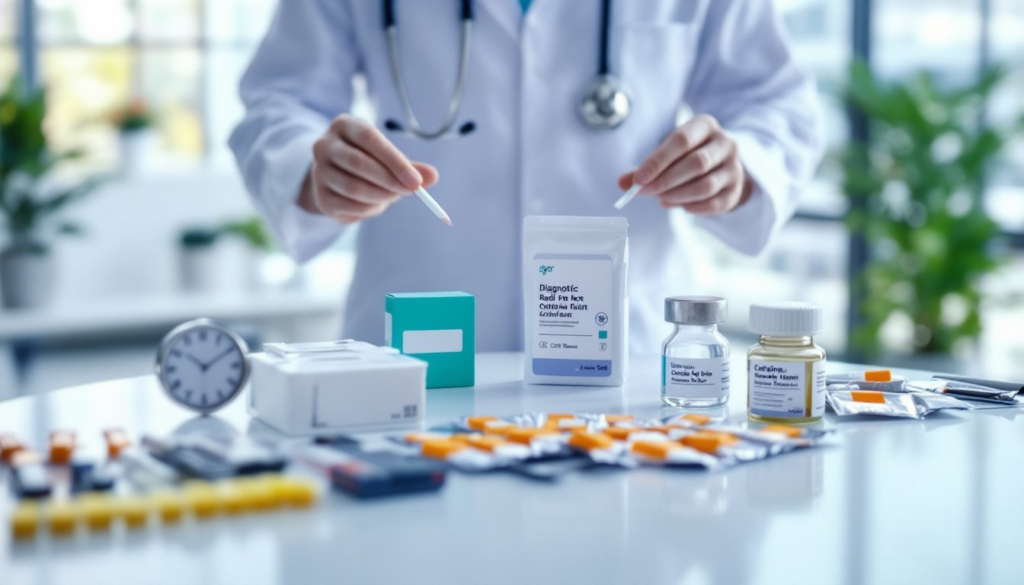
The cost-efficient in-house option, and the one most wellness coordinators end up buying. A single-panel urine dip strip at the 200 ng/mL cutoff, priced on a 14-tier ladder — $0.79 per strip at 25 units, $0.75 at 100, $0.57 at 1,000, falling to $0.29 at the 20,000+ tier. Take $0.29 for what it is: a top-tier volume price, not the entry point. 12 Panel Now is manufacturer-direct from Boynton Beach, Florida, dispatches same day on weekday orders before 3 PM EST, delivers across the US in one to four days, ships free above 100 strips, and reports over 5,000 commercial accounts. Drawback: cotinine comes in strip format only, and while the listing states CLIA waived, that designation is per-SKU — verify it before folding the strip into a clinical workflow.
3. Labcorp Test 716555 — Nicotine Metabolite, Screen Only, Urine
The lab-based urine alternative: a random 5 mL specimen screened by immunoassay against a negative threshold of 0.3 µg/mL, or 300 ng/mL — more permissive than the 200 ng/mL rapid standard, which matters if you want to avoid marginal positives. Labcorp notes cotinine is generally detectable about seven days post-exposure. Drawback: no published employer pricing, and lab turnaround instead of instant results.
4. American Screening Corp Nicotine Urine Cassette (One Screen, PREDX-MDCT-U12)
A cassette-and-dropper format at the 200 ng/mL cutoff, $12.60 per case of 25 ($11.97 on subscription), with per-unit pricing in the $0.41 to $0.99 range by quantity. The page states results are presumptive screening only. Drawback: no CLIA or FDA status is stated on the listing — get that in writing.
5. Abbott NicQuick Cotinine/Nicotine Urine Test Cassette (DCT-102)
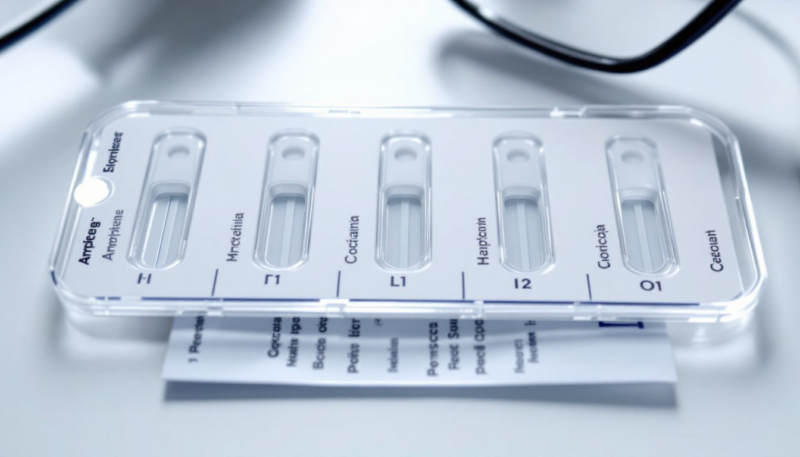
A 200 ng/mL cassette at $63.00 per box of 40, about $1.58 per test, listed for workplace, CLIA-waived and forensic use. Cassettes photograph and file more cleanly than bare strips when an incentive decision has to be documented. Drawback: several times the per-test cost of a strip.
6. CLIAwaived, Inc. IDTC Rapid Nicotine Test Cards
A three-line lateral flow card at $140.25 per 40 tests, roughly $3.51 each, from a large point-of-care distributor — convenient if you already source screening supplies there. Drawback: the page publishes neither a cutoff nor a regulatory statement, and it is among the most expensive rapid options here.
7. Identify Diagnostics 1 Panel COT Cotinine Nicotine Dip
Included as a caution rather than a recommendation. The same 200 ng/mL urine dip sold across the market, from $17.25 per box of 25 (about $0.69 a test) into bulk, but explicitly Forensic Use Only and not CLIA waived. Identical analyte, identical cutoff, different regulatory category — which is exactly why HR should read listings rather than trust the brand.
Side-by-Side
|
Option |
Specimen |
Cutoff |
Verified price |
|
Quest Cotinine |
Blood |
16 ng/mL |
Not published |
|
12 Panel Now Strip |
Urine |
200 ng/mL |
$0.79 at 25 → $0.29 at 20,000+ |
|
Labcorp 716555 |
Urine |
300 ng/mL |
Not published |
|
ASC Nicotine Cassette |
Urine |
200 ng/mL |
$12.60 / 25 |
|
Abbott NicQuick |
Urine |
200 ng/mL |
$63.00 / 40 (~$1.58) |
|
IDTC Rapid Nicotine Cards |
Urine |
Not published |
$140.25 / 40 (~$3.51) |
FAQ
Will a vape show up? Yes. Cotinine testing captures nicotine from e-cigarettes, pouches and smokeless products as readily as from cigarettes.
Can an employee blame secondhand smoke? At 200 to 300 ng/mL, incidental exposure rarely produces a positive. At a 16 ng/mL blood cutoff it becomes a more credible objection, which is another reason to publish an appeal process.
Do we need lab confirmation? Rapid results are presumptive. Send non-negatives to a laboratory before any decision with consequences attached.
For programs that settle on in-house rapid screening, 12 Panel Now sells cotinine strips direct in bulk tiers from 25 units up to 20,000 and beyond.